Guadalupe Cid · Long-term Shopify development across three regional stores
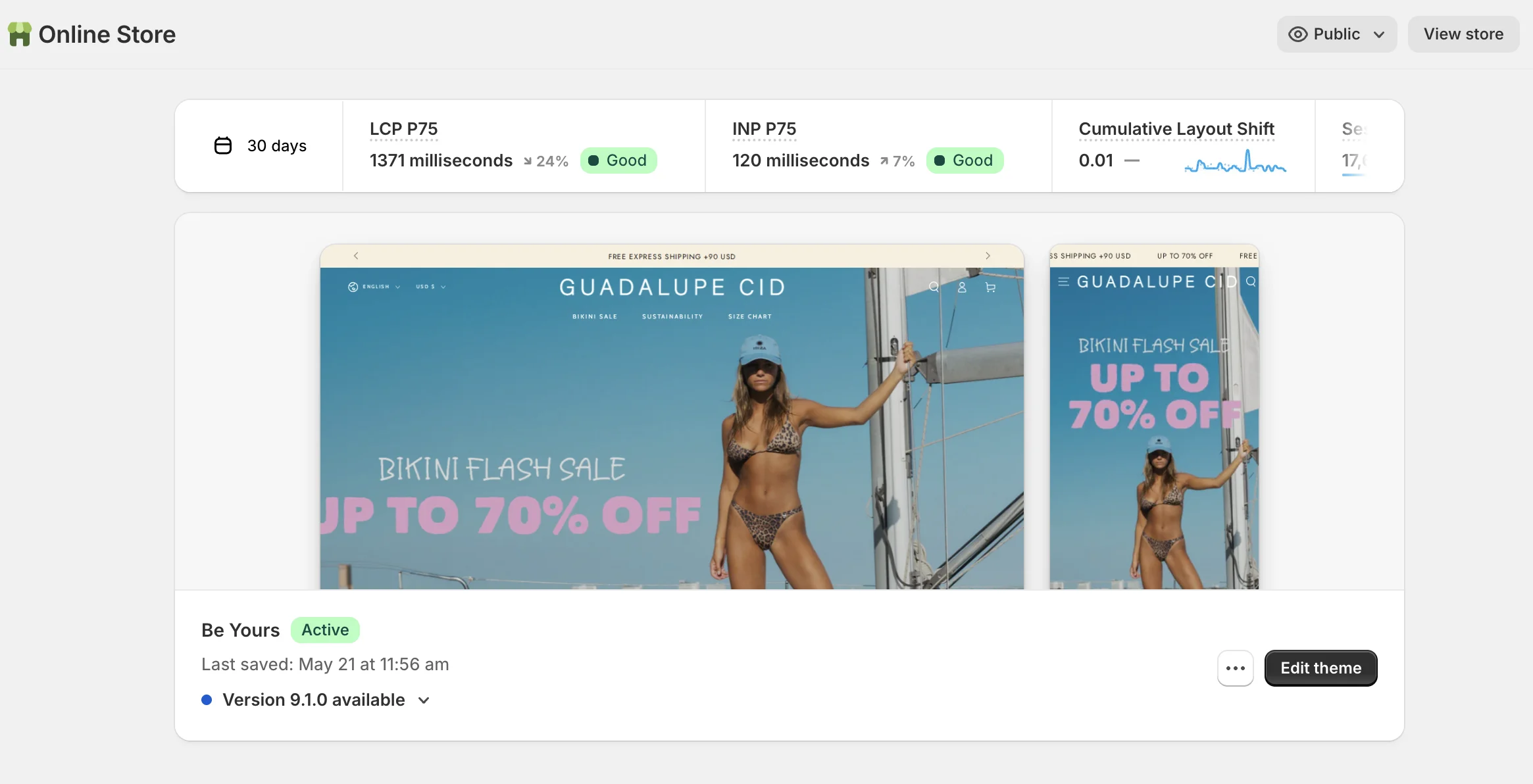
Guadalupe Cid is a swimwear brand on Shopify Plus operating three independent stores across different markets, processing over 38,000 orders annually.
I've been their main Shopify developer across all three stores, handling everything from ongoing support and fixes to full feature development and integration work.
Some of the highlights:
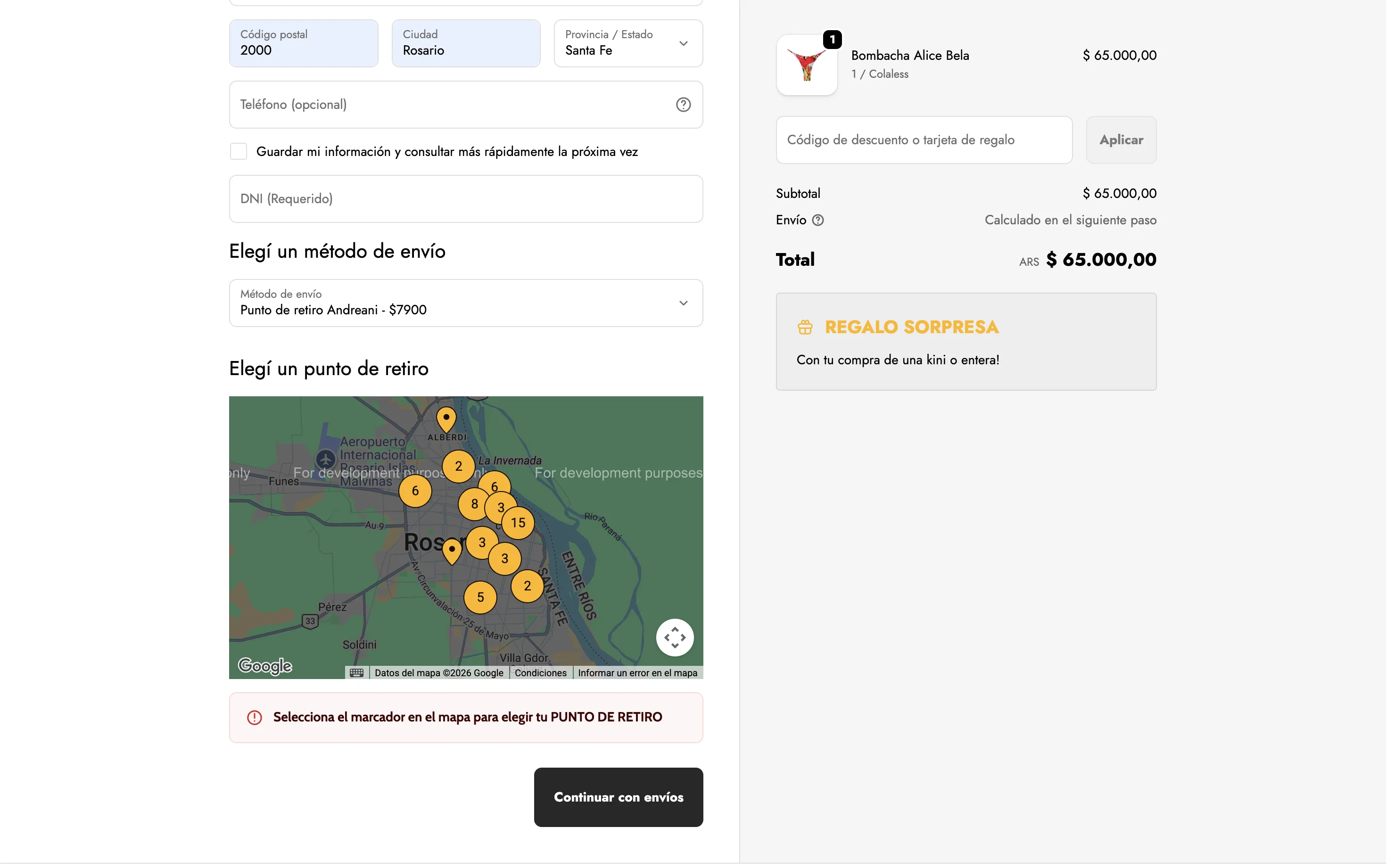
Pickup points with interactive map
The client wanted to replicate the pickup point experience from MercadoLibre: an interactive map showing nearby Andreani locations based on the customer's address, with real selection rather than a dropdown list. The previous solution used Zippin, a Shopify app that added a few static delivery options with no map and no real integration with Andreani's network.
I built a custom Checkout Extension that renders a Google Maps interface inside the checkout. When the customer enters their address, the extension queries a serverless function that fetches nearby Andreani pickup points from their API and stores them as metaobjects in the store. The map filters points by postal code and city, handles edge cases where city-based filtering works better than postal code, and shows the customer's location with a distinct marker. When a pickup point is selected, the selection is stored in Shopify's native company field on the shipping address, which the fulfillment integration reads downstream.
On the integration side, I also built the shipment guide creation with Andreani, connecting their API to generate shipping labels automatically when an order is fulfilled. This required working with their on-premise ERP Dragonfish, which I've maintained and extended over time. On-premise systems add their own complexity to support: no cloud access, deployment coordination, and limited visibility when something breaks remotely.
Government-issued ID validation (DNI)
The client needed to collect a government-issued ID number (known locally in Argentina as DNI) for every order, as required by local shipping and tax regulations. This field was previously stored in the order note, which created conflicts when customers wanted to add actual delivery instructions.
I built a Checkout Extension field to collect and validate this ID as a native cart attribute. Post-purchase, a Shopify Flow automatically moves it to a customer metafield for future checkouts. To enforce compliance, a Cart and Checkout Validation Function executes server-side, preventing customers from bypassing the field regardless of any browser-side modifications.
Gift with purchase
I built the full gift-with-purchase system natively: business rules in the theme, cart logic via the Cart API, a Checkout Extension to display the gift in the order summary, custom Liquid in the order confirmation email, and a Shopify Flow to tag qualifying orders and send low-stock alerts. The gift product is hidden from all sales channels using Shopify's native seo_hidden metafield. The system is configurable from the theme editor without touching code, and was replicated across the international store with independent configurations per region.
Customer support automation
The client was using Shopify Inbox manually with no automation. To help them configure a chatbot effectively, I extracted their full conversation history from Shopify Inbox programmatically, processed it with AI to identify the most frequent questions and the brand's natural response tone, and used that data to train their chatbot rules and FAQs. The result was a chatbot that responded in the brand's voice from day one rather than starting from generic templates.
- Stack: Python, TypeScript, Shopify Checkout Extensions, Shopify Functions, Shopify Flow, Google Maps API, Andreani API, Dragonfish ERP, Cloudflare Workers, Metaobjects